
Dog Training Tips: Why Positive Reinforcement Works Best
Publish Date: 15/10/2026
Estimated reading time: ~8 Minutes
Key Takeaways
- Positive reinforcement dog training rewards desired behaviours, making dogs more likely to repeat them — and it's the approach most trainers and behaviour experts recommend.
- Short, consistent sessions using high-value treats, praise, and play build trust, confidence, and a stronger bond between you and your dog.
- Puppy training can begin as early as 8 weeks — early socialisation and reward-based routines set the foundation for a lifetime of good behaviour.
Avoiding common mistakes like over-treating, long sessions, and repeating cues keeps training effective and tail-waggingly good fun.
Looking for dog training tips that actually work? You're in the right place. Positive reinforcement dog training is all about rewarding the behaviours you want to see more of — so your dog happily chooses to repeat them. Instead of correcting mistakes after they happen, you catch your dog doing the right thing and celebrate it with a treat, a “good dog!”, or a quick game of tug. Trainers and behaviour experts recommend this approach over punishment because it builds confidence, strengthens communication, and makes learning enjoyable for both of you. Whether you're starting with a new puppy or teaching an older dog new tricks, these dog training tips will help you build a stronger, happier bond.
Why Positive Reinforcement Is the Best Way to Train a Dog
So, what is positive reinforcement dog training? At its simplest, it's rewarding your dog — with a treat, praise, or a favourite toy — immediately after they perform a behaviour you want to encourage. The reward makes the behaviour more likely to happen again. It's dog psychology in action: rewarded behaviours get repeated.
The science behind positive reinforcement training is well-established. When a dog performs a behaviour and receives a reward, their brain releases dopamine — reinforcing the link between the action and the positive outcome. This creates a dog who actively wants to offer good behaviours because they've learned it leads to good things.
How Positive Reinforcement Builds Trust Between Dogs and Owners
Punishment-based methods can create fear and confusion. A dog who's worried about being corrected may shut down or become reactive. Positive reinforcement creates a safe environment where your dog feels confident to try new things — a dog who trusts you, listens willingly, and enjoys training sessions.
The benefits go beyond basic obedience. Dogs trained with positive reinforcement tend to be more confident, adaptable, and less likely to develop problem behaviours. They learn faster because they're not stressed about mistakes. And the bond you build through reward-based training? That's the real prize — a relationship built on trust, not fear.
Positive Reinforcement vs Punishment-Based Training
Aspect | Positive Reinforcement | Punishment-Based Training |
Learning outcomes | Faster, more reliable learning | Slower learning; may suppress behaviour without teaching alternatives |
Confidence building | Builds confidence and willingness to try | Can create anxiety and reluctance |
Trust | Strengthens the human-dog bond | May damage trust and create fear |
Behaviour change | Teaches desired behaviours | May suppress unwanted behaviours temporarily |
Stress levels | Low — training is enjoyable | High — training can be stressful |
How to Train a Dog: Obedience Basics Using Positive Reinforcement
Ready to put this into practice? Here's how to get started with the essentials. Dog training positive reinforcement works for all ages and breeds — you just need patience, consistency, and a pocketful of rewards.
Teaching Essential Dog Training Commands
Start with the basics: sit, stay, come, drop, and loose-lead walking. To teach your dog to sit, hold a treat close to their nose, slowly move it up and back over their head, and as their bottom hits the ground, say “sit” and reward immediately. Once they've got sit sorted, introduce new commands progressively — one at a time, in short sessions.
Reinforcing Good Behaviour at Home and in Public
Dogs don't generalise easily — a behaviour learned in the lounge room doesn't automatically transfer to the park. Practice commands in different environments, gradually adding distractions. Reward your dog for choosing the right behaviour in real-life situations, like sitting politely when guests arrive. Consistency is key: reward every good choice.
Building Reliable Recall Through Consistent Practice
Recall — coming when called — is the most important command your dog will ever learn. Start in a low-distraction environment, call your dog's name with enthusiasm, and reward generously when they come. Gradually increase distance and distractions. Never punish your dog when they eventually come — coming to you should always feel like the best choice.
How to Stop Dog Barking Using Positive Reinforcement
Dogs bark for all sorts of reasons — excitement, boredom, alarm, or attention-seeking. Instead of yelling, teach an alternative behaviour. Reward quiet moments, use a “quiet” cue paired with a treat, and gradually desensitise your dog to triggers. Addressing the root cause through dog behaviour training is more effective than suppressing the bark.
How to Stop Dog Pulling on Lead During Walks
Loose-lead walking is a game-changer. The moment your dog pulls, stop. Wait for the lead to go slack, then reward and continue. Your dog learns that pulling stops the walk, while a loose lead keeps it going. Reward frequently for walking beside you early on.
How to Stop Dog Jumping Up on People
Dogs jump up because they're excited and want attention. The fix? Remove the attention. When your dog jumps, turn away and say nothing. The moment all four paws are on the floor, reward with calm praise and a treat. Teach an alternative like sitting for greetings.
Positive Reinforcement Tips for Puppy Training Success
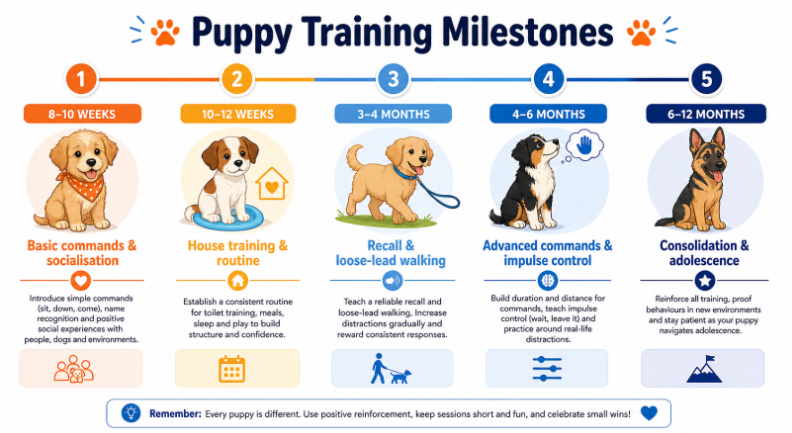
Puppy training is where the magic begins. Positive reinforcement is especially effective with puppies because they're eager to learn and highly food-motivated. Building good habits early sets the foundation for a well-behaved adult dog — and it's a whole lot of fun. These dog training tips work just as well for puppies as for older dogs.
Why Early Puppy Training Plays a Critical Role in Long-Term Behaviour
The first few months of a puppy's life are a critical socialisation window. Experiences during this time shape how your puppy responds to people, other animals, and new environments for life. Positive, reward-based exposure to a wide range of situations helps your puppy grow into a confident, well-adjusted adult dog.
Practical House Training and Toilet Training Tips for Puppies
Consistency is your best friend for toilet training. Take your puppy outside at regular intervals — after meals, naps, play, and first thing in the morning. Reward generously the moment they do their business outside. Accidents happen; respond calmly. Check out our guide here.
Teaching Puppies Basic Manners Through Positive Reinforcement
Start with simple cues like sit, come, and their name. Keep sessions to 3–5 minutes and always end on a success. Puppies have short attention spans, so brief sessions throughout the day work far better than one long one.
Using Socialisation and Confidence-Building Exercises During Puppy Development
Introduce your puppy to new people, friendly dogs, different surfaces, sounds, and environments in a positive way. Pair each new experience with a reward so your puppy learns new things are good things.
Creating Consistent Routines and Expectations for Training Success
Dogs thrive on routine. Set consistent times for meals, training, and walks. Use the same cues and hand signals every time. Patience and consistency are the secret to successful puppy training. For more on balancing treats with training, check out our guide here
Types of Rewards Used in Positive Reinforcement Training
Not all rewards are created equal. The right reward at the right time makes all the difference in how quickly your dog learns. Here's how to choose the best rewards.
Choosing High-Value Treats and Rewards for Effective Training
Training treats for dogs are the backbone of positive reinforcement. High-value treats — small, tasty, and easy to eat quickly — keep your dog motivated and focused. SCHMACKOS™ treats, made with real ingredients are paw-fect for rewarding good behaviour. Their irresistible, LIPSCHMACKIN'™ flavour keeps dogs engaged. Explore the full range to find the right option for your dog.
Using Praise, Toys and Play as Training Motivators
Treats aren't the only reward. Verbal praise — a cheerful “good dog!” — is a powerful motivator, especially when paired with a treat early on. Toys and play are brilliant for dogs who are more toy-driven than food-motivated. Mixing up reward types keeps sessions fresh.
Why Reward Timing Matters in Positive Reinforcement Training
Timing is everything. The reward needs to come within 1–2 seconds of the desired behaviour so your dog makes the right connection. Clicker training for dogs is a popular way to improve timing: the click marks the exact moment of the correct behaviour, followed by a treat.
Gradually Reducing Treat Dependence While Maintaining Results
Once a behaviour is reliable, you don't need to reward every time. Transition to intermittent rewards — sometimes a treat, sometimes praise, sometimes play. This strengthens the behaviour because intermittent rewards are more reinforcing than predictable ones.
Common Training Mistakes to Avoid
Even the best training advice won't work if you're unknowingly sabotaging your own progress. Here are five common mistakes to watch out for — and how to fix them.
Over-Treating and Ignoring Daily Calories
Treats should make up no more than 10% of your dog's daily calories. If you're training frequently, use small treats and adjust meal portions. Over-treating can lead to weight gain. Keep treats tiny — even a small piece is enough.
Training Sessions That Run Too Long
Dogs, especially puppies, lose focus quickly. Keep sessions to 5–10 minutes and aim for several short sessions throughout the day. If your dog seems distracted, you've gone too long. End on a positive note with a behaviour your dog can easily succeed at.
Repeating the Cue Over and Over
If you say “sit, sit, sit” without your dog responding, you're teaching them that the first “sit” doesn't matter. Say the cue once, wait a few seconds, and if your dog doesn't respond, reset and try again. Repeating cues teaches your dog to ignore the first request.
Unrealistic Expectations and Progressing Too Quickly
Every dog learns at their own pace. Don't move to the next level until the current behaviour is reliable in multiple environments. If your dog is struggling, go back to an easier version and build up gradually. Celebrate small wins.
Accidentally Rewarding the Unwanted Behaviour
Attention — even negative attention — is a reward. If your dog jumps up and you push them away, you're still giving them attention. The same goes for barking: if you tell them to be quiet, you've rewarded the bark. Instead, reward the behaviour you want and ignore or redirect the behaviour you don't.
Frequently Asked Questions
Placeholder for the 'Salesforce Datalayer Tag Block' field